

multicall

top-5-brainstorming-techniques/

A good session with feasible ideas. But some participants saying absolutely nothing. Others bickering due to conflict of their ideas. Notes of the meeting that are completely lost in a trail of e-mails. In other words, cases of brainstorming going wrong. And you probably would have been through this.


Brainstorming has always been a way to solve problems by holding a group discussion with members participating spontaneously and without restraint, and collecting information or ideas. It’s useful to bring together a wide range of viewpoints. The idea of brainstorming values quantity over quality (no, that wasn’t said incorrectly). But from harvesting a large quantity of ideas, team members tend to worry about the rejection of their ideas, and therefore filter our good ideas away from ones that are not. Brainstorming can only work if it is kept both efficient and effective. So let’s take a look into 5 techniques that will help with this either in person or over a MultiCall.

Brain Writing

Brainstorming starts as a discussion. But the core is to separate the creation of ideas from said discussion. And this comes down to a sequence of actions. First and foremost, the team leader shares the topic with the team, and team members individually write down their ideas. And putting into context the issues of brainstorming seen earlier, not only does this encourage everyone on the team to share their own ideas, but it also gives everyone more time to think over their ideas.

 In the process, everyone is participating as one effective group. And this technique is easy to handle in a MultiCall too. With MultiCall’s call monitoring feature, its possible to ensure every participant is present and has spoken up. But remember, it’s important that everyone collectively knows one another in the group when beginning the conference, so introductions are to be done prior to starting.

Starbursting

This particular technique is interesting in that it requires thinking about the who, what, where, when, why, and how for any new idea while ensuring maximum visual impact when presenting to the team. And it’s simple. Place your main idea at the center of a 6-point star diagram. Each point of the star stands for each of the 5 W’s and H. Develop a series of questions about your idea for each point. This is what makes it effective among brainstorming methods; it possesses an exploratory nature. The aspect of one question leading to another would lay the foundation to a solid strategy to implement for an idea. 

 Mind-Mapping

 Sometimes the old-fashioned ways are the best. And when in doubt, the old-school method of mind-mapping is quite effective too. When your team has to keep in mind multiple steps or a sequence, mind maps are effective in that it’d allow for capturing every idea in the air. And here’s the best part; it can be created either with online software or even by hand with pen and paper. This is effective over the phone with a MultiCall too.

 Assign a Scribe

 One way other than having each member to take notes themselves would be to assign one given person as a scribe. Whether in person or over the phone, take a few minutes in the course of the meeting to have the scribe read aloud the ideas and decisions recorded to that point. 

Figuring Storming

Outside of our office work, it’s always been a good human value to place ourselves in someone else’s shoes and put into context their actions. But it’s even better in our work as a technique to consider how someone else may handle a situation. This could be a superior in the office, a celebrity, or anyone you want. In the discussion, it allows for providing unique perspectives and ideas. But this technique is only as effective as the preparation done for them. Without the same, participants cannot be engaged sufficiently, and the team could lose clarity on the agenda’s items during a MultiCall. Assign each team member a given figure to prepare, well in advance to the meeting.

 When managed well, brainstorming can allow companies to envision and create innovative solutions to problems. And in the process of bringing everyone together, it also encourages individuals to commit to solutions, especially when they have provided valuable input and played a role in its development. In choosing from the above techniques, the best one is when from the company’s standpoint, individual and group brainstorming are optimally combined, with creativity freely encouraged, and only constructive criticism tabled for discussion.

 “Meet regularly with your business team and brainstorm. Intricate business problems are mostly resolved at brainstorming sessions.” – Richard Branson

Contact Form


apple-store-app
google-play-app

YOU MAY ALSO LIKE

multicall

  How Audio-First Communication Reduces Decision Fatigue

Decision fatigue happens when individuals are required to make too many choices in a short period of time. In business environments, this often comes from constant messages, emails, and multiple communication tools demanding attention. Over time, this overload reduces the ability to think clearly and make effective decisions. A simpler communication approach can help reduce this mental strain
Read More »
multicall

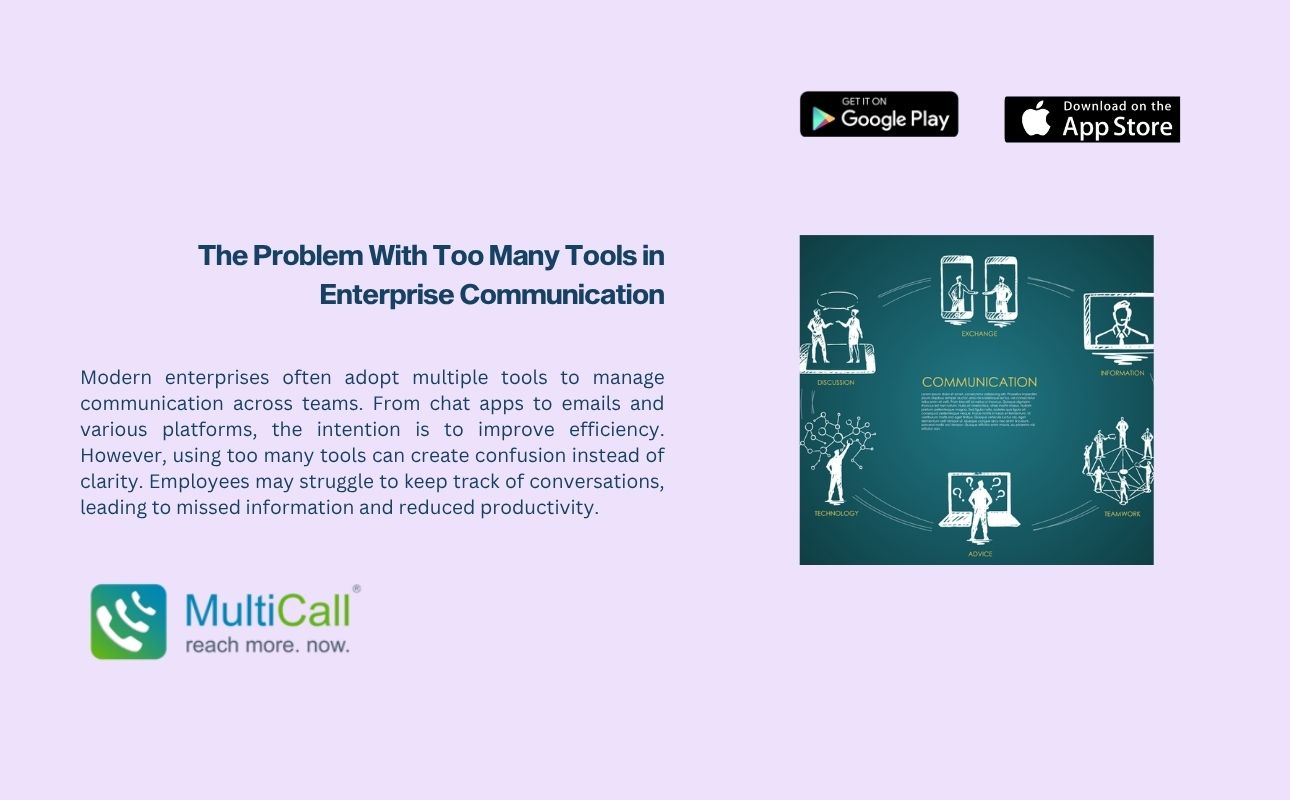
 The Problem With Too Many Tools in Enterprise Communication

Modern enterprises often adopt multiple tools to manage communication across teams. From chat apps to emails and various platforms, the intention is to improve efficiency. However, using too many tools can create confusion instead of clarity. Employees may struggle to keep track of conversations, leading to missed information and reduced productivity.

Read More »
multicall

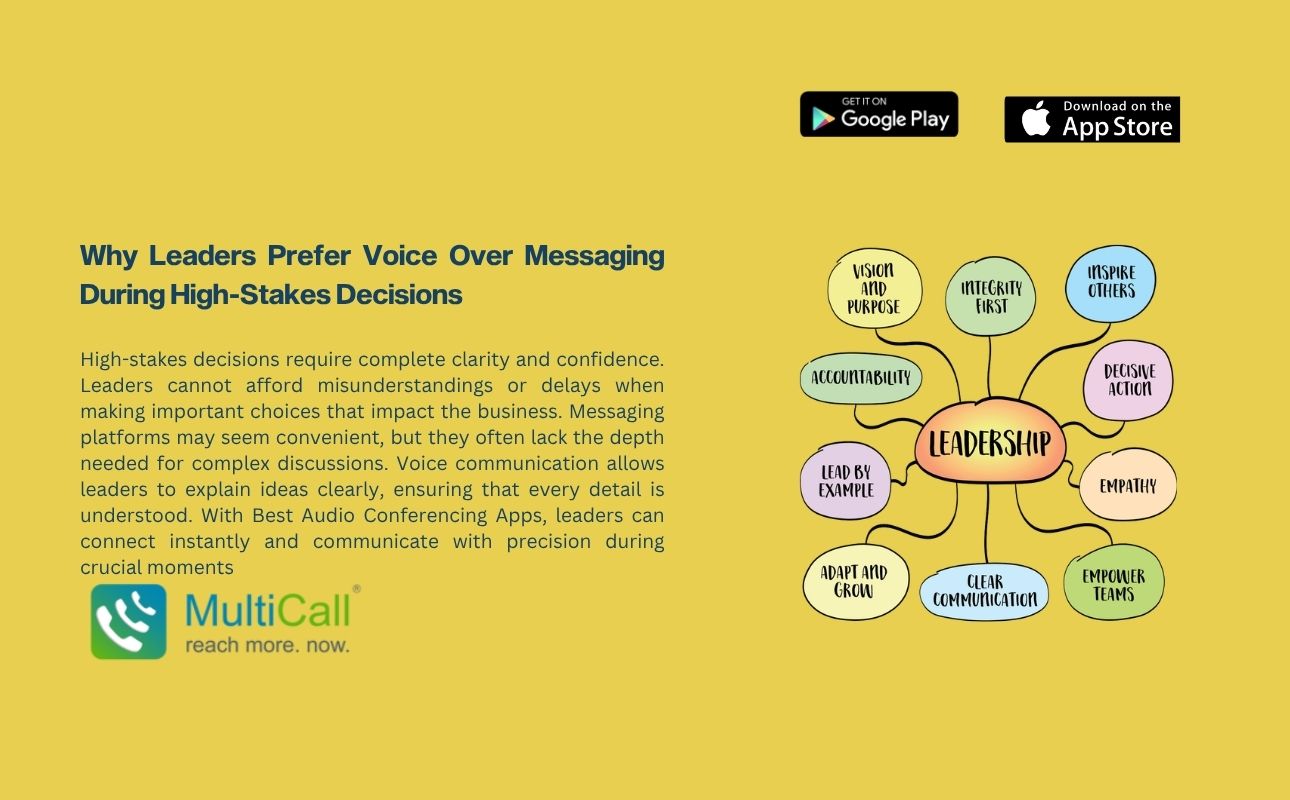
 Why Leaders Prefer Voice Over Messaging During High-Stakes Decisions

High-stakes decisions require complete clarity and confidence. Leaders cannot afford misunderstandings or delays when making important choices that impact the business. Messaging platforms may seem convenient, but they often lack the depth needed for complex discussions. Voice communication allows leaders to explain ideas clearly, ensuring that every detail is understood. With Best Audio Conferencing Apps, leaders can connect instantly and communicate with precision during crucial moments.

Read More »
multicall

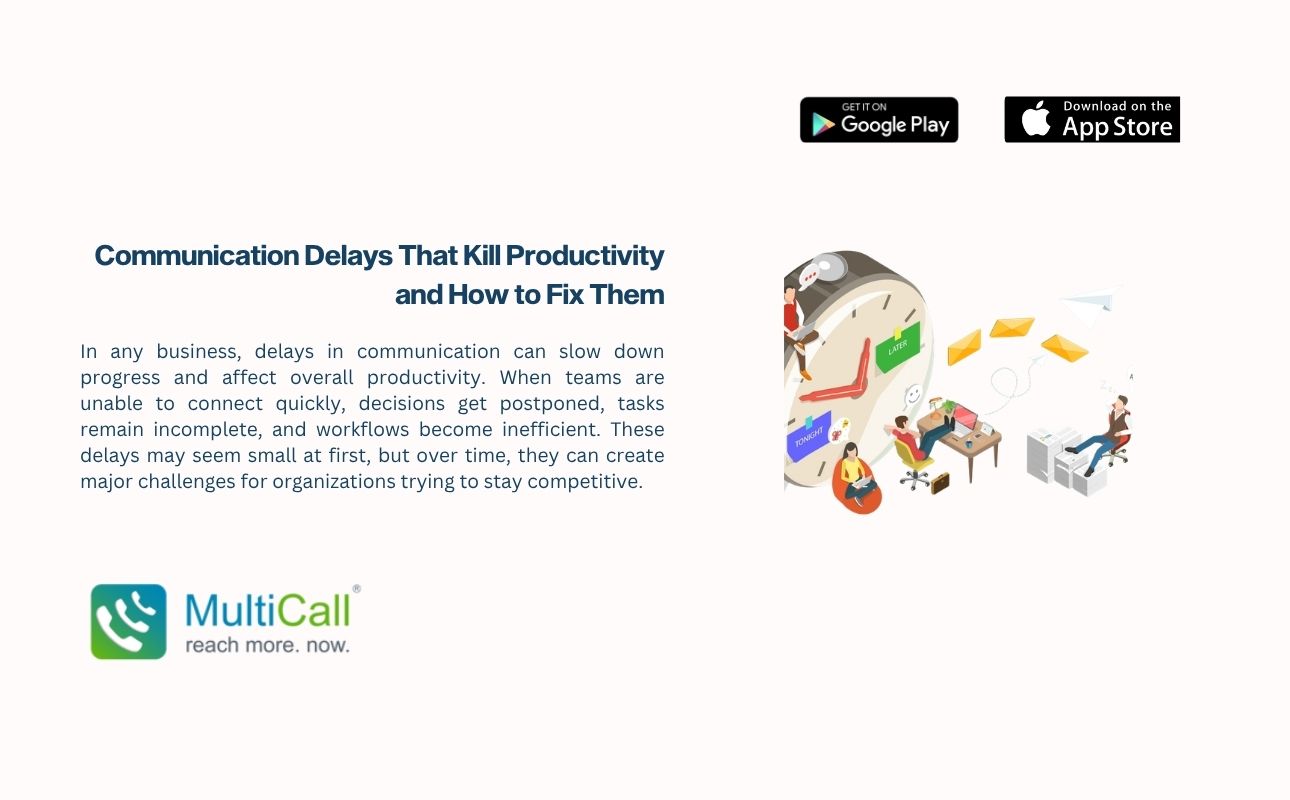
 Communication Delays That Kill Productivity and How to Fix Them

In any business, delays in communication can slow down progress and affect overall productivity. When teams are unable to connect quickly, decisions get postponed, tasks remain incomplete, and workflows become inefficient. These delays may seem small at first, but over time, they can create major challenges for organizations trying to stay competitive.

Read More »
multicall

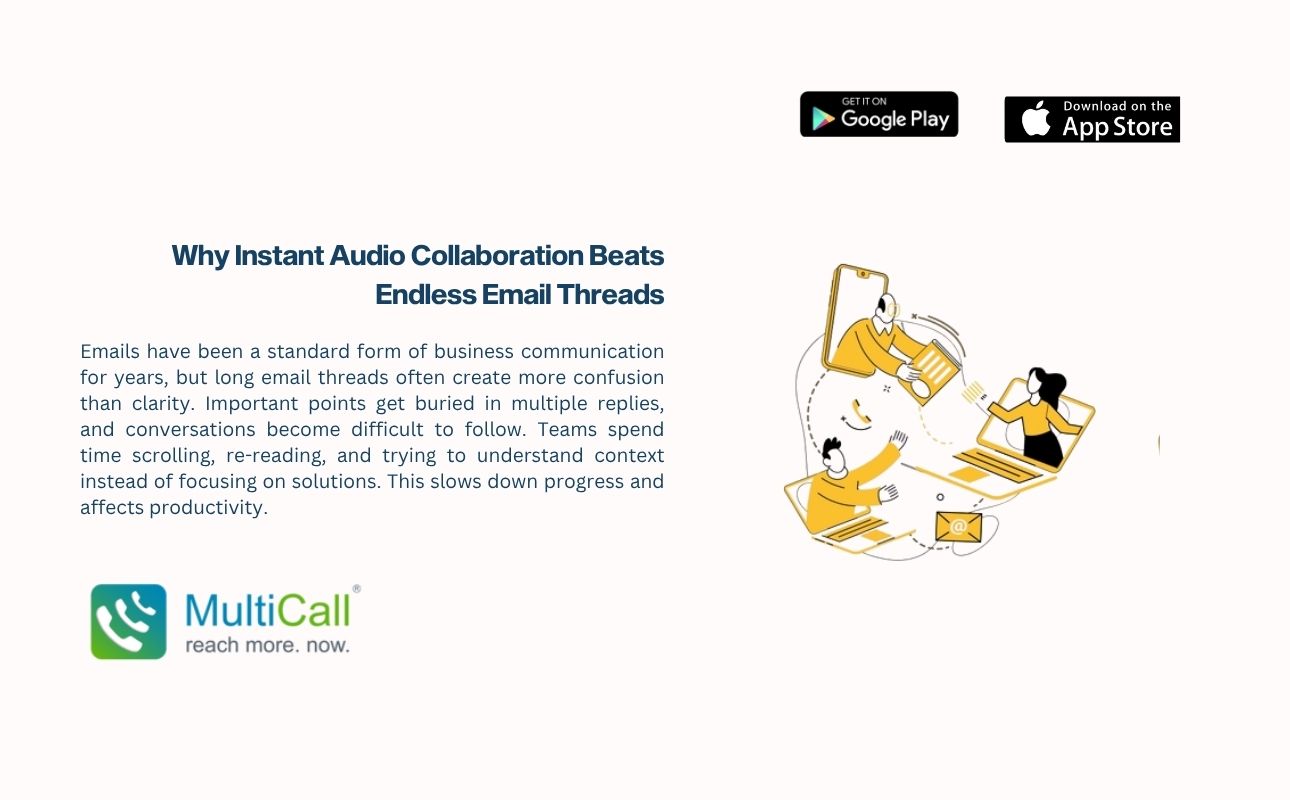
 Why Instant Audio Collaboration Beats Endless Email Threads

Emails have been a standard form of business communication for years, but long email threads often create more confusion than clarity. Important points get buried in multiple replies, and conversations become difficult to follow. Teams spend time scrolling, re-reading, and trying to understand context instead of focusing on solutions. This slows down progress and affects productivity.

Read More »
multicall

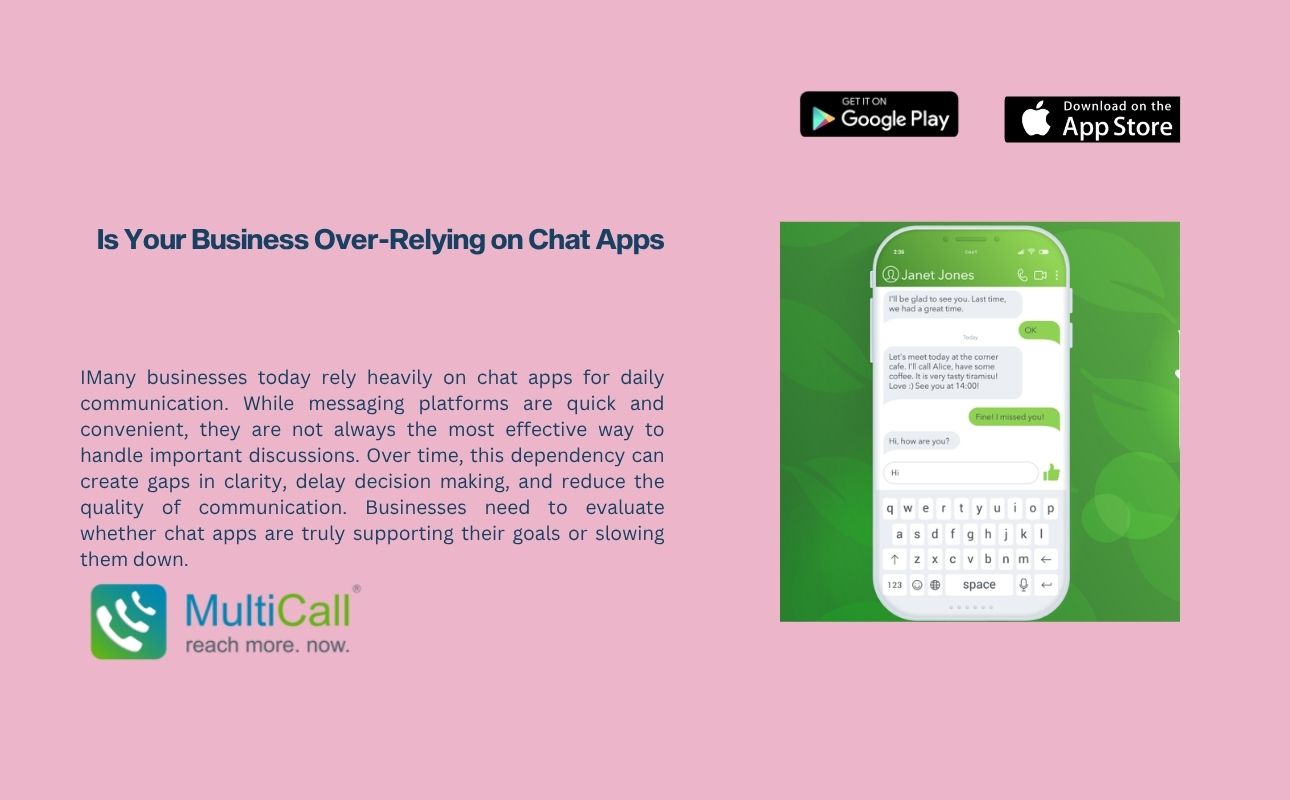
 Is Your Business Over-Relying on Chat Apps

Many businesses today rely heavily on chat apps for daily communication. While messaging platforms are quick and convenient, they are not always the most effective way to handle important discussions. Over time, this dependency can create gaps in clarity, delay decision making, and reduce the quality of communication. Businesses need to evaluate whether chat apps are truly supporting their goals or slowing them down.

Read More »