

multicall

MultiCall for Business: A Tour

Once you login to your account using your domain email id, it takes you to the dashboard.

Overview

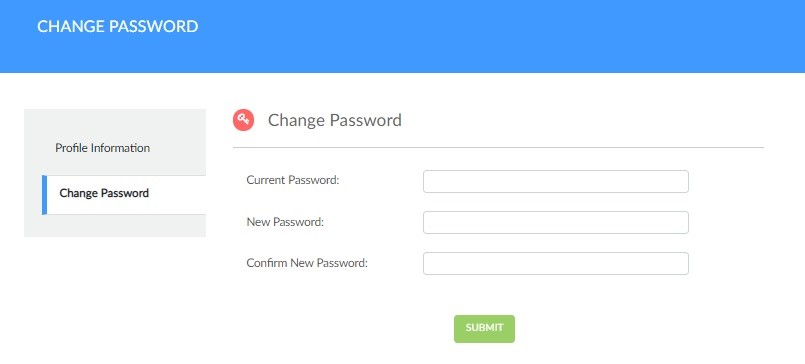
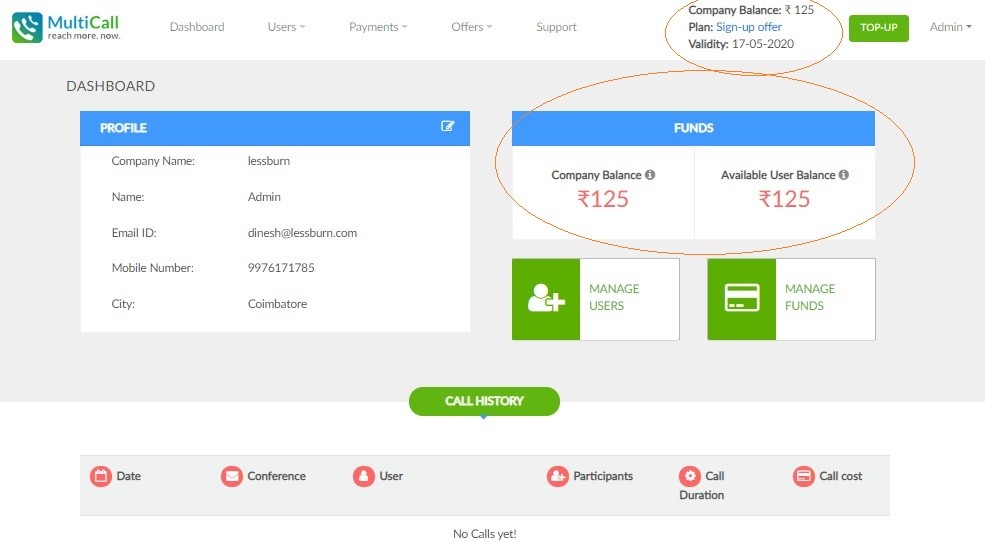
The dashboard is your information tool to check all details regarding your profile; with your essential details such as Company, Name, E-mail ID, Mobile Number and City displayed. Should you find an error in any of them, you can click on the ‘Modify’ icon, and will land on the page as below upon doing so

Change Password

You can also modify your account password as and when needed.

Change your passwords regularly, and do not reuse them!

Call Monitoring is an integral feature of MultiCall; all your MultiCalls are registered in the Call History section, where you can monitor completed calls, the duration, the number of participants, and the call cost involved. This is especially useful for businesses such as SMEs needing 100% control over spending, and therein need to scrutinize their usage.


Funds

With both prepaid and post-paid services offered for your consideration, it’ll be necessary to know what plan the company is currently using and its validity in order to ensure smooth operations. It also provides you the information on your existing funds…separated into company balance and the balance available to users.


Both funds and users are resources, and resources require proper allocation in order to be efficient and effective. Considering this, the ‘Manage Users’ button lets you add users, identifying them by Name, Email ID and Mobile Number, and also to mark whether the user is authorized to execute international MultiCalls.

Users

Besides the functions of Managing Users and Balance mentioned previously, the Users tab also allows you to view account usage history as well to maintain track of both the balance and the amount actually used.

Payments

The payments tab essentially is comprised of the following sub-sections:

Payment

Payment History

Plan My Plan


Contact Form


apple-store-app
google-play-app

YOU MAY ALSO LIKE

communication

Communication Stability as a Business Continuity Tool

Business continuity depends on consistent and reliable communication. During disruptions, whether technical failures, natural events, or sudden operational challenges, teams must stay connected to maintain productivity. Audio conferencing offers a stable solution, allowing enterprises to continue operations seamlessly.

Read More »
voice backup

Why Enterprises Should Have a Backup Voice Strategy

Unexpected disruptions can hit any business. Internet outages, technical failures, or emergencies can stop normal communication, affecting productivity and decision-making. Having a backup voice strategy ensures enterprises remain connected, respond quickly, and maintain operations even during disruptions.

Read More »
real time communication

Why Real-Time Voice Communication Wins in Emergency Scenarios

Emergencies demand speed and precision. When unexpected events strike, whether in business, healthcare, or field operations, delays in communication can cost time, resources, and even lives. Real-time voice communication ensures teams connect instantly, make quick decisions, and respond effectively.

Read More »
audio secure

The Real Value of Simple, Secure Group Calling

In busy enterprises, communication should be simple, reliable, and secure. Complex platforms or unreliable connections can slow down collaboration and increase risks. Simple secure group calling provides a foundation for effective teamwork, allowing employees to focus on their work while staying connected and aligned.

Read More »
audio

 Why Audio Communication Is Still the Backbone of Enterprises

Even in the era of video calls and chat platforms, audio communication remains the most reliable and effective way for enterprises to connect teams, partners, and clients. Clear voice interactions allow organizations to share information instantly, make decisions faster, and maintain alignment across departments. Audio remains the backbone because it combines clarity, accessibility, and speed in ways that other tools often cannot match.

Read More »